Owning a camper or RV is one of the best ways to explore the country on your own terms. But nothing ends a trip faster than waking up to water dripping on your face. A damaged roof is the most common and expensive issue RV owners face.
The good news? Most camper roof repairs are well within the skill set of a motivated DIYer. On the other hand, doing it yourself can save you $3,000–$8,000 compared to a professional replacement.
This guide walks you through everything you need to know to assess, repair, and protect your camper roof properly, whether you have an EPDM rubber, TPO, fiberglass, or aluminum roof.
First Step: Identify Your Roof Type and the Extent of Damage
Not all camper roofs are created equal, and the repair approach changes depending on the material.
- EPDM (rubber): Most common on older and mid-range RVs. Black or white rubber membrane, usually glued or mechanically fastened.
- TPO: Newer single-ply membrane, typically brighter white and slightly textured.
- Fiberglass: Smooth, painted surface often found on higher-end Class A motorhomes and some fifth-wheels.
- Aluminum: Classic silver metal roof as seen on vintage Airstreams and some truck campers.
Walk the roof using the proper fall protection, or use binoculars from a ladder to look for:
- Cracks or splits in rubber
- Bubbling or separation at seams
- Punctures from branches
- Chalky oxidation (EPDM)
- Delamination or soft spots (fiberglass)
Take photos and measure the damaged areas. If more than 20–25% of the roof is compromised or you can feel spongy decking underneath, consider a full recoating or professional replacement.
Essential Tools and Materials for Most Camper Roof Repairs
Most likely, you already own half of these:
- Pressure washer (gentle setting)
- Stiff brush
- TSP cleaner
- Dicor self-leveling and non-leveling lap sealant
- Eternabond tape (4″ or 6″ width)
- Sealant: Geocel ProFlex RV, Sikaflex-715, or Dicor 501LSW
- EPDM or TPO patch kits (material-specific)
- Fiberglass repair kit (resin, cloth, and hardener) for fiberglass roofs
- Plastic putty knives and seam roller
- Nitrile gloves, safety glasses, and knee pads
- Roof cleaner and UV protectant (such as 303 Aerospace or Protect All)
Pro tip: Buy 10–20% more sealant and tape than you think you need. If you run out mid-project, you will be miserable.
How to Repair a Camper Roof: Step-by-Step Process
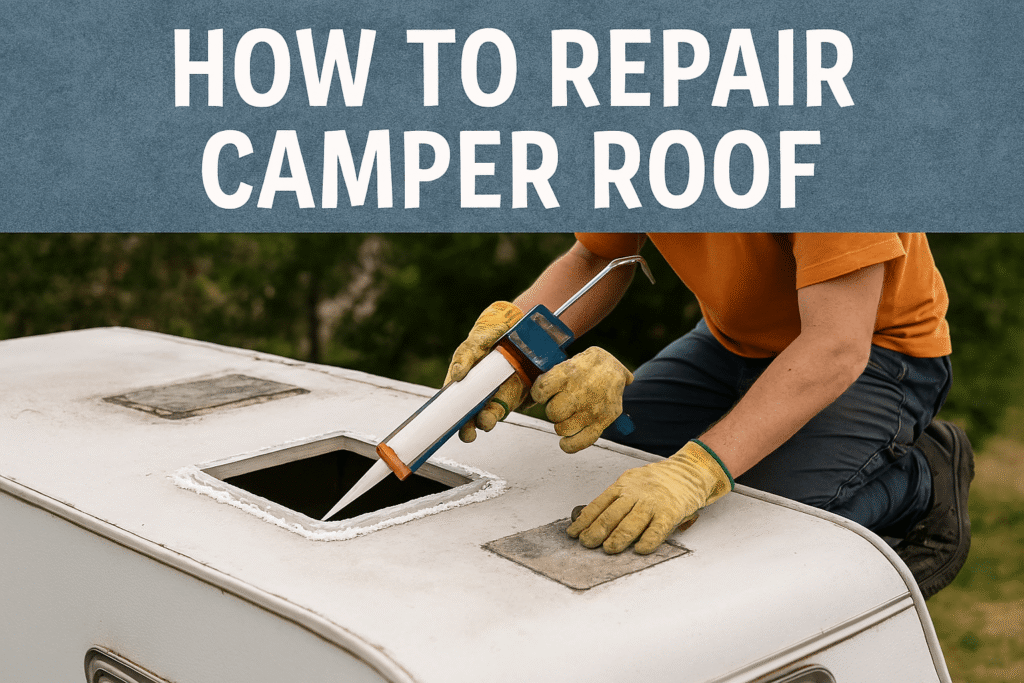
- Clean Thoroughly (This step is 50% of success): Dirt, chalking, and old sealant prevent new material from bonding. Pressure wash at low PSI or scrub with a TSP substitute. Let dry completely—24–48 hours if possible.
- Remove Old, Cracked Sealant: Use a plastic scraper and heat gun on low to lift cracked Dicor from seams, vents, and edges. Do NOT use a metal blade, you will end up slicing the membrane.
- Repair Tears and Punctures: For small holes less than 3″, clean them and apply Eternabond tape with firm roller pressure. For larger tears, round the corners, clean 6″ beyond the damage, apply a patch with lap sealant underneath and Eternabond over the top for double protection. Seam seal all edges.
- Re-seal Every Seam and Penetration: Every roof vent, skylight, antenna, and edge termination must be re-sealed every 3–5 years, even if it “looks okay.” Apply new self-leveling sealant in a continuous ⅜” bead and let gravity do the work.
- Address Fiberglass-Specific Issues (if applicable): Sand cracked gelcoat lightly, clean with acetone, apply marine-grade fiberglass resin and cloth in layers, sand smooth, then recoat with compatible gelcoat or RV roof coating.
- Apply Protective Coating (Highly Recommended): After repairs, roll or spray on a roof coating with EPDM/TPO. Liquid Rubber, Heng’s Rubber Roof Coating, or Dicor Rubber Roof Acrylic are some of the best products. For fiberglass, Dicor Fiberglass RV Roof Coating or FlexArmor (sprayed by certified installers).
A quality coating adds 5–10 years of life and makes future cleaning dramatically easier.
Common Mistakes That Cause Repeat Failures
- Skipping cleaning or rushing dry time
- Using household silicone or big-box caulk (it fails in UV within months)
- Over-applying self-leveling sealant (it cracks when too thick)
- Ignoring the front and rear cap seams—they move the most and leak first
- Not protecting the roof from branches and low clearances afterward
Maintenance Schedule to Avoid Future Repairs
- Inspect and touch up the sealant every spring and fall
- Clean roof 2–4 times per year with mild soap (never petroleum-based cleaners on rubber)
- Reapply UV protectant every 3–6 months
- Trim overhanging branches at every campsite
Final Thoughts
A well-maintained camper roof can easily last 15–25 years, while neglect turns minor $300 repairs into $8,000–$15,000 replacements. The process outlined above has saved thousands of RV owners from massive expenses and downtime.
If you’re reasonably handy, have a free weekend, and are comfortable on a ladder, you can confidently tackle 90% of camper roof problems yourself.
For very large damage, severe deck rot, or if you simply prefer professional results, hire a company that specializes in seamless sprayed roofs.
Either way, address leaks immediately; water damage spreads fast and destroys insulation, wood, and wiring beneath what you can see.
Safe travels, dry ceilings, and happy camping!